6. The Details: What Surgery and Recovery Actually Looked Like
After sharing what the experience of surgery felt like, I realised there’s another side to this that I would have wanted to know myself.
Not just the emotional side — but the practical reality.
What it actually looks like.
What happens before, during, and after.
The things you think about… and the things you don’t expect.
So this is that post.
Before Surgery: The Unknowns
In the lead-up, I had a lot of questions.
Some I asked.
Some I probably should have asked.
And some I didn’t even know to think about until afterwards.
Things like:
What should I bring?
How will I feel when I wake up?
How limited will I be?
How long until I feel “normal” again?
I tried to prepare where I could — organising things at home, making sure support was in place, and mentally getting myself ready.
But there’s only so much you can prepare for when you haven’t experienced it before.
The Day Itself
The day of surgery was actually straightforward, as I had expected.
There’s a process to it — check-ins, conversations, preparation — and in some ways that structure helps. You’re guided through each step, which removes the need to overthink.
What stood out most wasn’t anything dramatic.
It was how calm everything felt.
Not because it was easy — but because it was happening, and there was nothing left to decide.
Waking Up & Immediate Aftermath
Waking up was probably the part I was most unsure about beforehand.
And the reality was… manageable.
Not completely comfortable — but not overwhelming either.
More than anything, I felt:
Tired
Slower
Very aware of my body
Relieved.
There’s a shift that happens here — from being in control of the process to needing to listen to your body in a completely different way.
The First Night
The first night was probably the most confronting part of the whole experience.
Not in a dramatic way — but in a very real, physical sense.
There was pain and discomfort from the surgery itself.
The presence of tubes.
The awareness of everything that had just happened.
Sleep didn’t really come.
Between the pain, the unfamiliar environment, and the constant monitoring — observations, checks, movement — it felt like a long night of being half-awake, half-resting, but never fully settled.
It wasn’t unbearable.
But it also wasn’t easy.
And I think that’s something I didn’t fully anticipate — how much that first night would ask of you, just in terms of patience and getting through it.
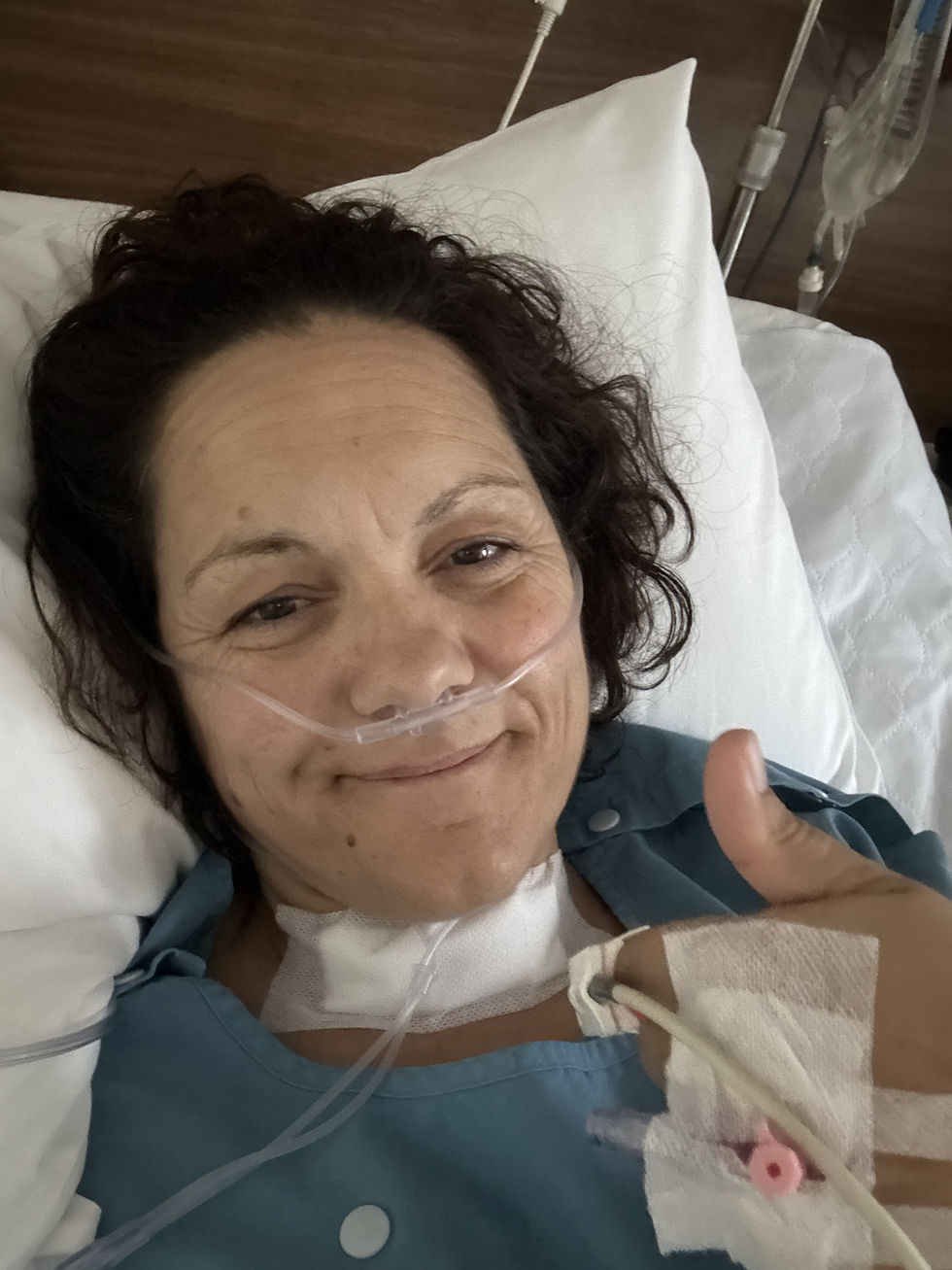
The Morning After
By morning, things felt clearer.
Still sore. Still tired — but clearer.
The surgeon came to check everything:
The surgery site
How I was feeling
How things were settling.
And there was something reassuring about that moment.
A sense of:
👉 it’s done
👉 it went as planned
👉 now we move forward.
Being told I could go home felt like a turning point.
From hospital to recovery in my own space.
The First Few Days
This is where the reality of recovery starts to settle in.
The pace is ALOT slower than I’m used to.
I have no energy.
Simple things take alot of effort.
I found myself needing to:
Rest way more than expected
Be mindful with movement
Accept that I couldn’t just “push through”.
And that adjustment — mentally as much as physically — has probably been the biggest part.
What Surprised Me
There were a few things I didn’t fully anticipate.
How unbelievably tiring it would feel — even without doing much.
How quickly your body lets you know when to stop.And how different “doing nothing” feels when it’s not a choice.
How long I would feel like this.
But also…
How capable the body is of healing when you actually give it the space to do so.
Training & Letting Go (For Now)
One of my biggest questions going into this was around training.
When can I get back?
How much can I do?
How quickly can I rebuild?
And the honest answer right now is — I don’t fully know yet.
What I do know is that this isn’t a phase to rush.
As much as training is part of who I am, this is a moment where recovery has to come first.
That doesn’t mean stopping completely.
But it does mean adjusting expectations.
Listening more.
Doing less.
Trusting that rebuilding will come.
What Helped
A few simple things have made a difference:
Having support organised ahead of time
Keeping things simple (meals, routine, expectations)
Letting people help — even when I’d usually say “I’m fine” - this was hard for me
Not trying to rush the process
Nutrition - healing from the inside, once my appetite come back after general anaesthetic.
Nothing complicated — but all important.
What I’d Say to Someone Facing This
If you’re heading into something similar, this is what I’d say:
You won’t have all the answers beforehand.
And that’s okay.
The first night might be harder than you expect — but it passes.
And after that, things start to feel more manageable, step by step.
Where I Am Now
Right now, I’m still in recovery.
Still figuring out what “normal” looks like again.
Still learning what my body needs.
But there’s progress — even if it’s quieter than I’m used to.
And for now, that’s enough.
The next phase of this journey is another kind of waiting — waiting for results, for answers, for clarity on what comes next.
And that brings a different kind of challenge again.


Comments